

If monkeys cry while breastfeeding, I can too.
monkeys, more than any human, prepared me for nursing


More than pregnancy or birth, the thing I feared the most about becoming a mother was breastfeeding.
Since I was a kid, I’d been preparing myself for the reality of pregnancy and birth.
I never dreamed about my wedding; I dreamed about my baby’s nursery. Gender-neutral, earthy green. A combination of white wood and natural, light wood. A comfortable rocking chair.
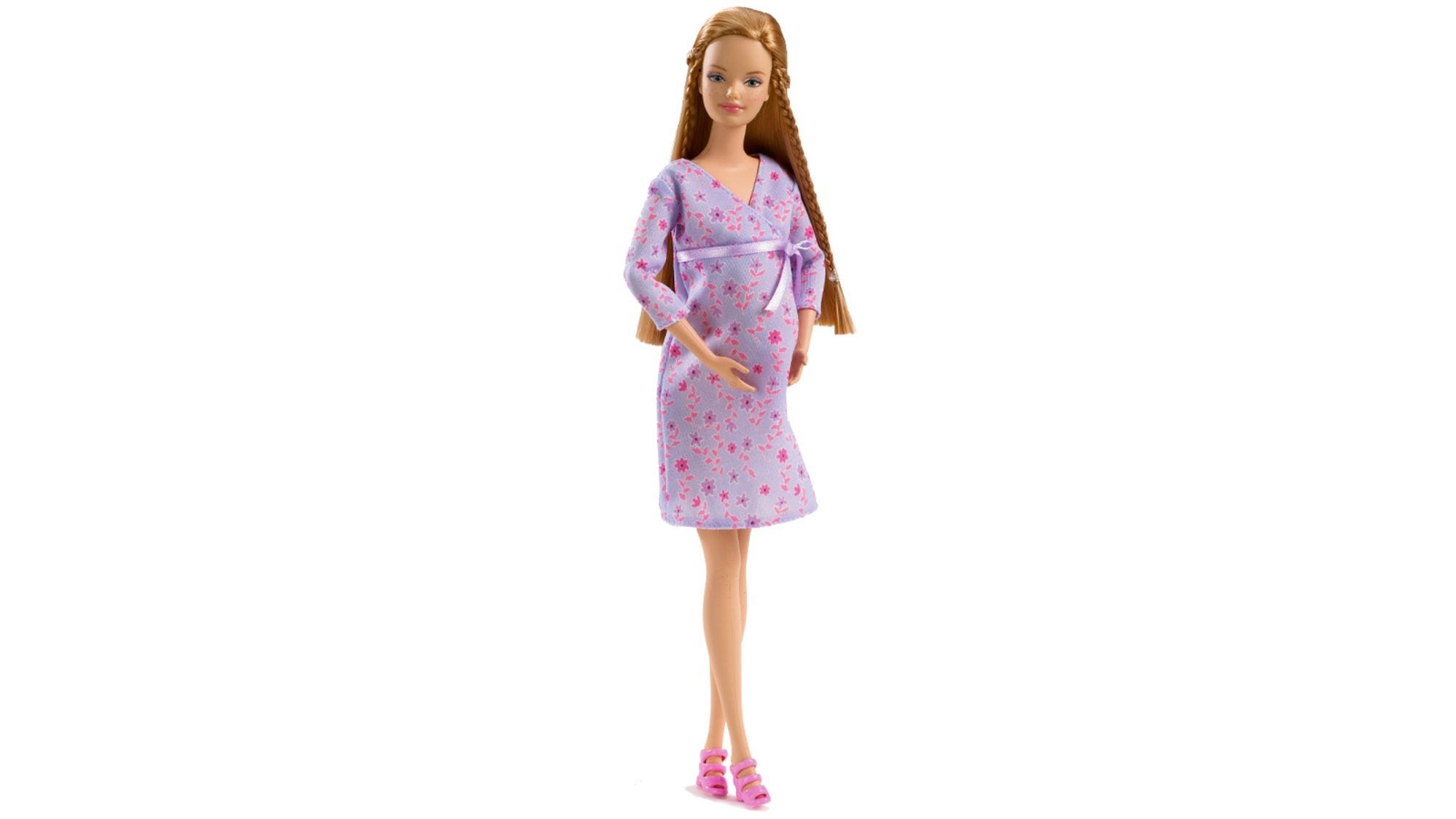
One of the most common storylines played out with my and my sister’s Barbies was childbirth. I had Midge the Barbie doll, complete with her magnetic pregnant belly and teeny tiny newborn.
My sister had the Doctor Barbie, whom we named Doctor because… imagination is a finite resource, okay?
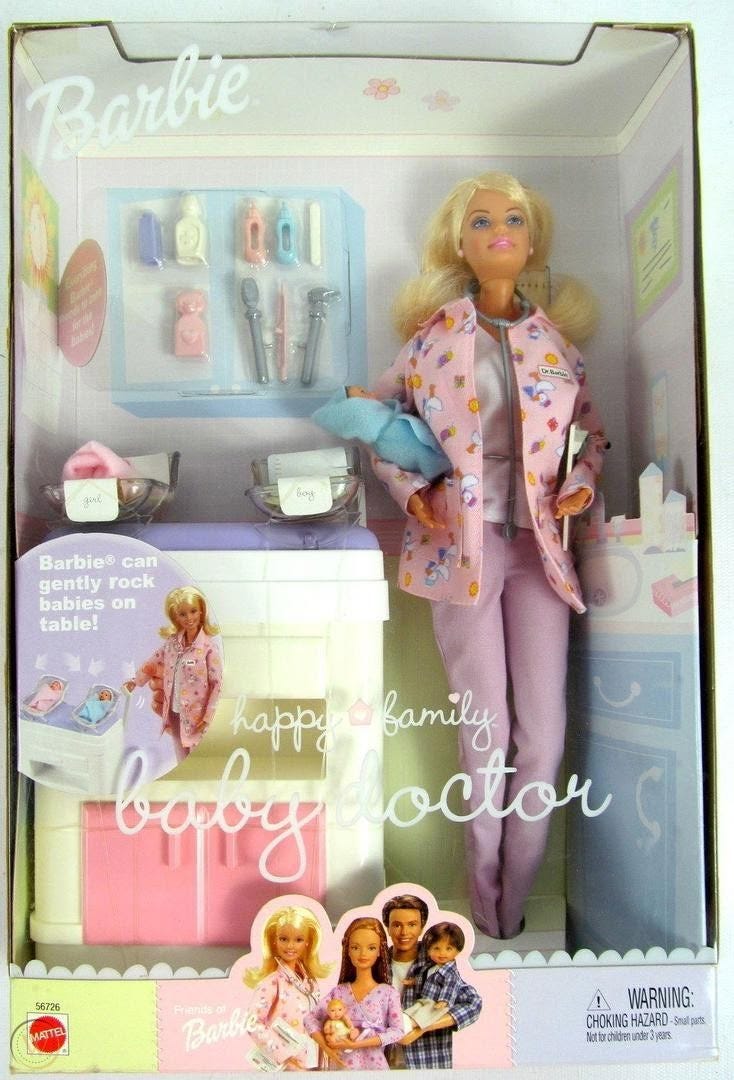
These were, without a doubt, my favorite Barbie dolls and my favorite story line to play over and over. The magic of pregnancy, the drama of birth—push! push!—, the sweet relief of holding a newborn.
My sister and I never played out the next part: the sleepless nights, the constant worry, or… the cracked and bleeding nipples.
Because nobody told us that’s what it was like. That the marathon of pregnancy ends in the marathon of birth, which then launches right into… another marathon of recovery and parenting a newborn.
Flash forward a few decades, to early 2024, and it was clear to a shockingly grumpy pregnant Allison that nobody had prepared me for the reality of breastfeeding. And as a storyteller and professional information gatherer (scientist) I was well aware of my wide, gaping lack of knowledge.
AND GUESS WHAT?
Absolutely nothing I read made me feel more prepared.
In working with titi monkeys, I’d estimate I’ve worked closely with about 50 different monkey moms. To be honest, at one point I could name them all, along with the names of their kids in birth order, but matrescence (becoming a mother) has a way of ctrl-A-delete-ing a lot of information from the brain.
Some of those monkey moms are pros. 10 kiddos? No problem. At the point when I met them, they were so well-prepared and so used to childrearing, they nursed their infants and passed them back to dad nearly on autopilot.
Titi monkey fathers do about 95% of parenting—everything except lactation (making milk and feeding baby).
Most of the titi moms did their part, nursing, like it was no big deal. But two moms in particular surprised the hell out of me.
For context, I’ve spent a lot of time listening to and analyzing monkey vocalizations. I’ll spare you the full ethogram (list of behaviors and definitions) of titi monkey vocals, and cut to the chase.
There’s a specific vocalization called a trill that’s used primarily by baby titi monkeys.
It’s a high frequency vocalization characterized by fluctuating
Sorry, old habits.
A titi monkey baby’s trill sounds like a cricket.
Listen here:
Trills are used in the exact same way human babies use cries.
A trill signals to the parents that the infant needs care.
Whether that’s milk, being groomed, play, a position adjustment, or something else, the trill communicates a blanket: HEY HEY HEY I NEED YOU.
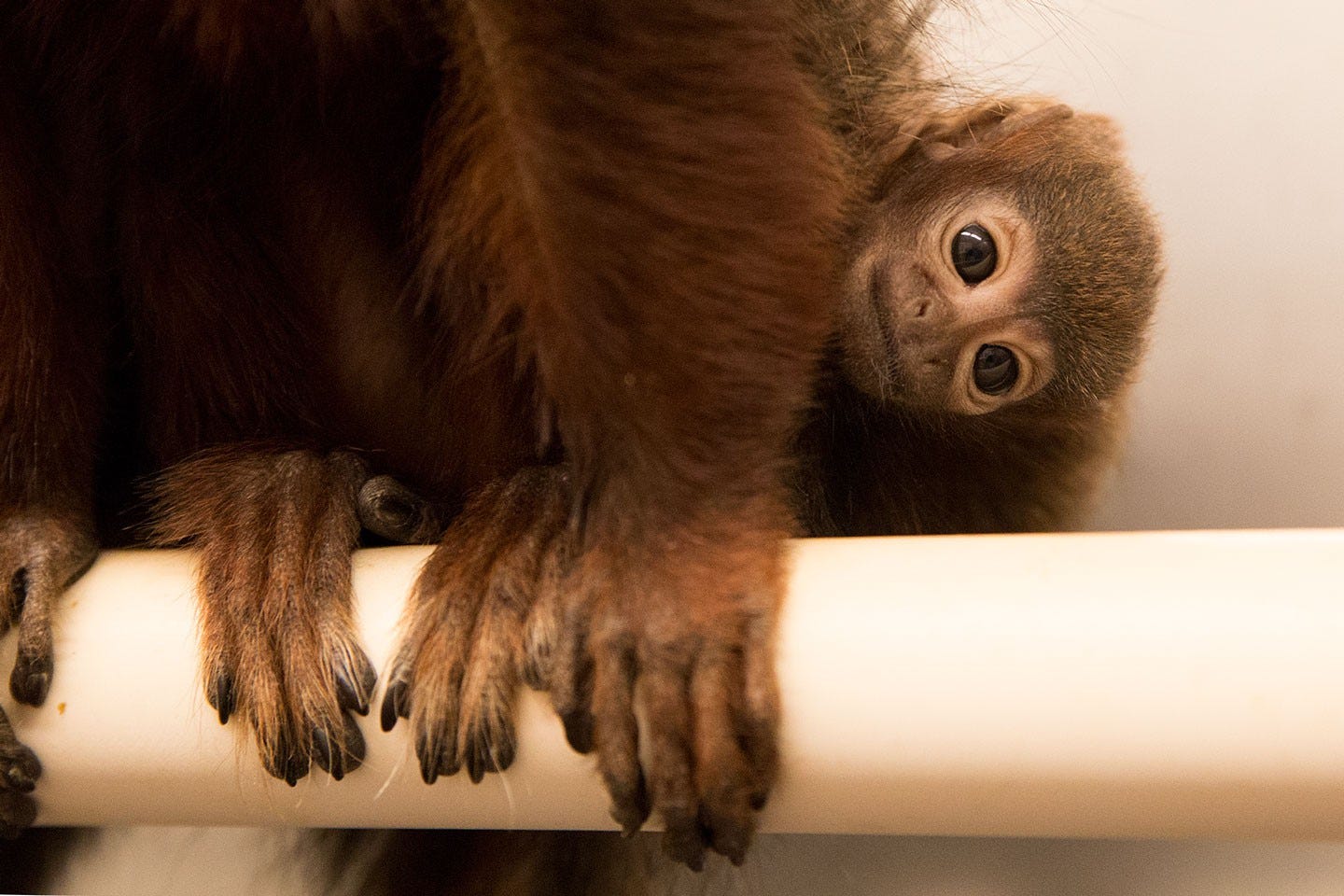
As titi monkeys age, other vocalizations take precedence and they don’t trill as often.
As titis age into their teenage years, they still trill, but it’s much less frequent. And it’s lower in pitch than a baby trill.
Once titi monkeys hit adulthood, trill vocalizations still occur, but they’re even lower in pitch than the teenage trills and adults used trills to express intermittent displeasure.
Basically, complaints or calls for attention—not outright, full-bodied displeasure like babies (both titis and human).
This was my working understanding of trill vocalizations—until I witnessed a nursing mama trill.
One morning, I heard a very high-pitched trill. Nosey and perpetually curious, I poked my head into that enclosure, expecting to see the new infant trilling.
To my surprise, the infant monkey was latched to the breast, likely nursing, and certainly not the one vocalizing.
The mama monkey made direct eye contact and trilled right at me: super high-pitch, nearly identical to a baby monkey’s trill.
She held her arms up in the air, away from the baby, back hunched like she was trying to pull away from the baby’s latch. She didn’t want to touch the baby or push it away, but she certainly was not happy about it being latched to the front of her.
She trilled again, and it was the most obvious “I don’t like this” display I’ve even seen from a titi monkey mama.
To me, it looked like this mama was crying while breastfeeding.
That absolutely blew my mind.
She was a first time mother. So I figured that maybe she just needed some time to figure things out.
However, a few months later, another mother did nearly the exact same thing, trilling like a baby, hunching away from her latched. And this mom was a very experienced mother.
Like people, some titi mamas just don’t enjoy breastfeeding. And apparently every infant’s breastfeeding journey is different. I can’t say whether these moms were in pain, annoyed, frustrated, or something else, but it’s obvious that the experience wasn’t pleasant for these two ladies.
I’ve been lucky with my breastfeeding journey. Despite being terrified and feeling completely unprepared, my experience has been net positive. I had a good lactation consultant at the hospital, I use internet resources effectively, had experienced mom friends who shared advice, and have a pretty “can do” attitude. Fletcher and I figured things out with minimal pain in the beginning and minimal mishaps along the way.
I was an overproducer. I stocked our freezer full of pumped milk. I got mastitis. I got clogged ducts. I got severely dehydrated once or twice. But boy oh boy, that freezer is FULL.
But, as it turns out, the stock of milk in the freezer was from a time period during which I had high lipase milk, a harmless feature of some breastmilk that makes it taste like nails or metal or, for some moms, soap.
My high lipase milk tastes like nails. I hate it. The aftertaste will linger for hours afterward.
I had to try it because I didn’t understand why my baby wouldn’t drink it. My baby, now toddler, who’s still breastfeeding a bit, still won’t drink it.
Cue the smallest, saddest violin in the world.
I have a whole stash of energetically-costly breastmilk that nobody in our family will drink and no milk bank will accept, since I was on anti-depressants at the time (still am). Looks like my toddler will get breastmilk baths for the rest of his life at this rate.
After a bad run-in with mastitis and clogged ducts and my hands going raw from doing pump part dishes, I threw in the towel on pumping well over a year ago.
And that brings us to now. Here we are, nearly two years into breastfeeding. I didn’t think we’d still be at it this far into the experience, to be honest. But it’s just a normal part of our life and routine. My body grew him; my body feeds him. It’s natural and normal for us.
Sure, there have been tears. But not when you’d expected… every time I got bitten (always by accident), I’d grit my teeth and bear it.
Multiple trips to the ER for breastfeeding-related complications? Honestly just a funny story to tell later. No tears needed.
Waking up in puddles of my own milk, breasts engorged to the point of pain, out of my mind antsy trying to get relief? No tears, just urgency to fix it.
The idea of weaning my toddler before he’s ready? Instant tears.
Breastfeeding is a bonding ritual for us. It’s the time where we reconnect, take a few minutes to be quiet and still together, and rekindle that physical connection we’ve had for his entire life.
My body was his first home. It’s still his safe home base.
I know our bond will exist and persist beyond our breastfeeding days, but it’s devastating to imagine letting go of that, especially when nursing is still something my toddler wants.
For context, as a mammal, based upon our kiddos’ developmental trajectories, it’s biologically normal and healthy for our kids to breastfeed until they naturally wean themselves somewhere between 4 and 7 years old.
Culture has made that the anomaly, not the norm.
The norm is to consider breastfeeding weird, gross, or sexualized. Breastfeeding (feeding our live young milk) is literally part of our definition of what makes us mammals.
I want to scream from the rooftops any time someone gives me a dirty look for breastfeeding my baby in public. But nobody likes a “crazy” postpartum woman yelling at them, especially if what she’s yelling is grounded in irrefutable biology.
Some days, I want my body back to myself.
Some days, I want to push off this little boob barnacle and tell him to go find some other snack.
Some days, I’m really tired of having my teeth and nose and hair and ears and neck manually inspected by slightly damp fingers with super sharp fingernails (didn’t I just trim those last week!?).
But most days, I hold my boy close and snuggle him as he nurses to sleep and it’s the most right, the most whole, the most satisfied my stupid mammal brain has ever been.
Because in reality, this is an emotional and physical connection. Not a mental one. So much of parenting and pregnancy is emotional and physical, and the analytical brain, for me, has so very little to do with it.
Breastfeeding is one of the activities that scared me about parenthood. It also forced me to let go and trust that while there’s so much unknown about the process, I’ll figure it out in due time.
Breastfeeding is just one part of my motherhood journey that’s made me feel like a Big. Dumb. Mammal.
Many times in the journey of pregnancy, birth, breastfeeding, and parenting, I’ve felt completely out of control of my body and mind, at the whim of the biological processes that I understand on paper, but can barely believe the reality of living them.
It’s put me in touch with my mammalian realities and allowed me to surrender to the very primal ways in which our bodies morph and change throughout the process of creating another human.
I’ve had enough time and perspective from some of those trickier days. I’m playing around with the idea of a series of really honest essays about living inside a pregnant and postpartum body as someone who’s well-familiar and comfortable with observing the biology of anyone but herself.
If this sounds like something you’d like to hear more about, let me know. If there’s something about pregnancy, birth, postpartum, or parenting that you’ve always wanted to know about—without the sugar-coating or pastel colors—ask away. Odds are, I’ve lived it and I’ve witnessed 50+ monkeys go through it.
👋🏻 Meet your Monkey Girl
Hi, I’m Allison aka Monkey Girl—a published author, PhD scientist, and trusted book editor.
I’m reclaiming my story, one chapter, one essay, one monkey at a time. Read the latest chapters of my romcom Love Letter to Wanderlust every Monday, and keep your eyes peeled for my 👣 Path to Published series as well as longer essays.
When I’m not typing away at my computer, I’m usually on a plane with my husband and toddler, or defending my three very patient cats from my very excited toddler.

Thanks for being here, truly. If you have thoughts, questions, anything, send me a message. I read every word and I’d love to hear from you.
Photography by the brilliant c.m.elle studios.
WoW, I love this! You are amazing!
Allison -- thank you for sharing this. I learned SO much & am so fascinated by the connections between your monkey & mom lives...and appreciate you giving us a look inside.