

Monkeys need houseplants
featuring one the research studies I am most proud of.


Throughout my time working in traditional research academia, I have had the pleasure of mentoring over 60 undergraduate students and close to a dozen graduate students. Each mentee shaped me and my science in measurable ways, whether we worked together for a month or four years.
Occasionally, I’ve come across students who just… have it. That indescribable spark. That vital bit of curiosity, joy, determination, and openness… I think of it as the secret recipe to being a scientist. And in my case, a primatologist.
Today I get to feature one of those people. From the moment I met Jon Bunting, I knew he’d thrive in research, and more importantly, rise to the challenge of asking meaningful questions in a tricky research environment.

The following research study spans all the topics of my heart: basic biology, anthropology, psychology. Obviously primatology.
I don’t get to take hardly any credit for this: Jon deserves all the kudos and more. I just got to be a part of this study.
Jon set out to ask a question: does the presence of live plants impact the behavior and welfare of indoor-housed titi monkeys?
This question stems from the biophilia hypothesis, which states that the presence of greenery has noticeable positive impacts on human mood, healing rates, and overall health. I’ll spoil it now: YES. Titi monkeys enjoy having greenery in their environment. We observed increases in positive behaviors in the presence of plants compared to baseline (no plants) and compared to the presence of a non-plant object (PVC pipe structure).
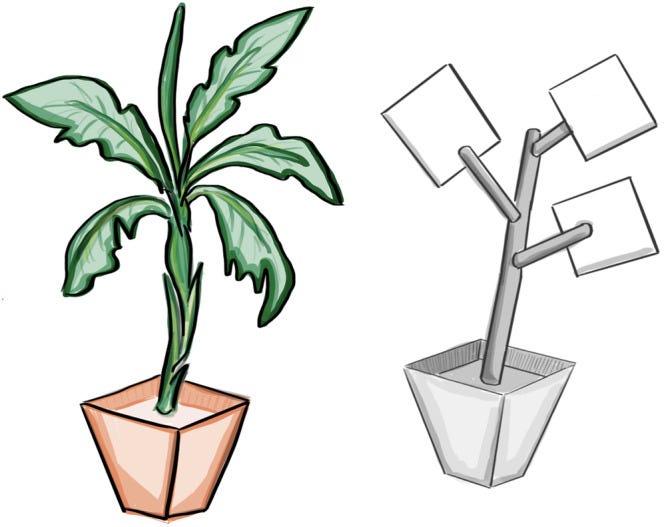
On top of that, we noticed a decrease in stress-related behaviors when plants were present.
Upon this study’s publication, I had a chance to pick Jon’s brain and provide a bit of insight into what went into this really cool research project.
Allison: Where did the initial idea for the biophilia study come from?
Jon: Like many students who first enter a laboratory animal facility, I was struck by the empty, sterile enrichment of a laboratory animal housing space. When your encounters with exotic animals are primarily in zoos over your whole life, you grow accustomed to seeing the animal in a carefully constructed habitat exhibit. Seeing the titi monkeys in a significantly more plain environment was, initially, unnerving, but it brought up a question as to whether or not the animals actually care... Are we just anthropomorphizing them if we assume they would like more greenery around their home cages?
Social interaction, opportunity for a wide array of physical movement, and dietary interventions tend to be the most emphasized tools for ensuring well-being for animals in captivity, but after reading the robust literature about the benefits of indoor plants for humans, I continued to wonder if it could be a potential enrichment strategy for the titi monkeys.
A: Running a full research project (as your FIRST research experience) is a huge undertaking. What was the most difficult part of running this study?
J: The most difficult part was the planning and pitching phase. For very good reasons, any research involving non-human primates (NHPs) must go through many scrupulous approval phases; it is not as simple as bringing a plant into the housing room and leaving. I had to meet with numerous veterinarians, behavioral technicians, and husbandry workers before this project could be approved. Each individual, depending on their expertise, has different questions and concerns; needing to regularly recalibrate the “pitch” to emphasize how a given situation could be addressed took a lot of work, but it was such a rewarding process to see all these different perspectives involved in keeping the animal safe. Animal safety always has to come first. We had to have plans in place for all sorts of different scenarios. For example, what to do if the monkeys—which are often considered a neophobic species—seemed to be afraid of the plant.
A: What part of this process (ideation, study design, equipment building, data collection, data processing, data analysis, writing, publication) was the most fun and why?
J: The most fun part was building the objects and obtaining the plants. It was so pleasingly unexpected to work on a project that involved an element of “tinkering” or craftiness. Having an afternoon break from my biochem courses to sit outside and figure out how to build a plant-shaped PVC object—surrounded by gibbering macaques on either side of me, fifty yards away—was a great illustration of the occasionally absurd scenarios one finds themselves in when conducting research. Deciding what plant to get was also a fun process. We took many things into consideration, including size, strength, difficulty to maintain, but also geographic distribution. The UC Davis Botanical Conservatory ended up being such an incredibly valuable resource for the project, as they helped us select Musa acuminata, and also donated all the plants used.
A: If you had absolutely no limitations for a followup study, what would you investigate? I’m talking no limitations on funding, location, approvals, research question, etc. The most wild biophilia part 2 you could ever dream up :)
J:
One: I would want to expose the monkeys to novel objects for a significantly longer amount of time to see if, or how long until, their behavior returns to their baseline. The potential short-lived nature of the behavioral responses to the novel object is a common concern for any type of object enrichment.
Second: I would like to introduce the monkeys to a wider array of objects, with varying levels of similarity toward the plant. The original motivation to include the PVC “control object” was to see if any behavioral motivations were the result of plant-specific reactions, rather than a response they might have to any novel object. We definitely found some evidence that plants were uniquely and specifically interesting, but I still think there would be value in testing other objects, such as artificial plants, to uncover more responses. Keeping live plants alive indoors has enormous practical concerns. If we found similar responses to artificial plants, then it could indeed be worth further investigating as a legitimate enrichment strategy.
A: Where are you now and what are you working on these days?
J: I currently work as laboratory manager at UC Berkeley’s Beery Lab where we study social behavior in prairie voles. With my future research, I hope to focus on uncovering the fascinating ways in which the immune system is involved in orchestrating social behavior, with implications for health and cooperation.
~
Feel free to read the full study here.
Thank you, Jon, for creating such an elegant research study and allowing me to be a small part of that journey! All monkeys deserve greenery in their lives!
👋🏻 Meet your Monkey Girl
Hi, I’m Allison aka Monkey Girl—a published author, PhD scientist, and trusted book editor.
I’m reclaiming my story, one chapter, one essay, one monkey at a time. Read the latest chapters of my romcom Love Letter to Wanderlust every Monday, and keep your eyes peeled for my 👣 Path to Published series and occasional longer essays.
When I’m not typing away at my computer, I’m usually on a plane with my husband and toddler, or defending my three very patient cats from my very excited toddler.

Thanks for being here, truly. If you have thoughts, questions, anything, send me a message. I read every word and I’d love to hear from you.
Photography by the brilliant c.m.elle studios.
It’s honestly so nice to see data conclude what we all confirm instinctively. Nature is medicine, physical, mental, and emotional. Not that I needed another reason to go get a plant😅🪴
That’s a very interesting study. A little greenery brightens up our day! Thanks!